Synonym(s)
Ageratina altissima var. altissima
Eupatorium rugosum var. rugosum
Common Name
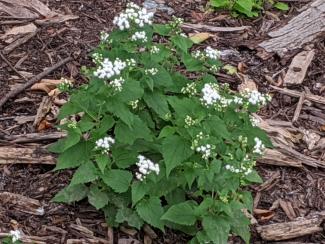
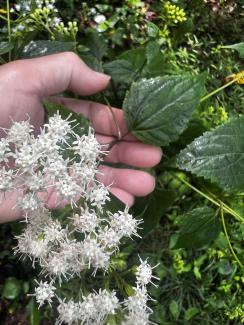
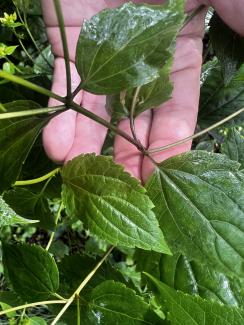
White snakeroot
Plant Form
Herbs
Duration
Perennial
Max Height (ft)
6.0
Width (ft)
2.0 -
4.0
Growth Rate
Medium
Region
Coastal
Piedmont
Mountain
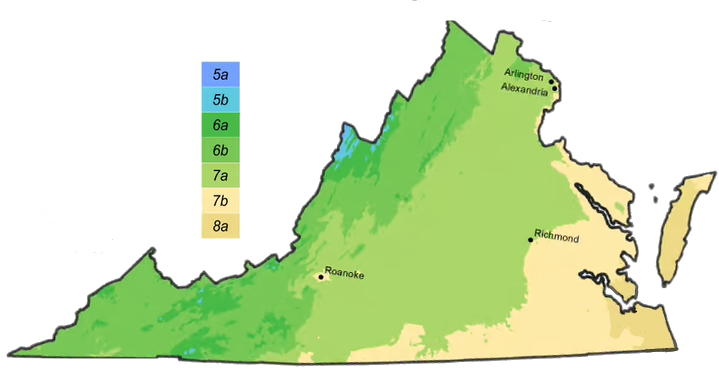
Hardiness Zone
5,
6,
7,
8,
9
Commercially Available
Nurseries that may carry live plant:
Nurseries that may carry seeds:
My Native Garden
Put together a printable/downloadable list of plants that you have in your garden.
Habitat
Shaded woodlands, moist forests, and thickets. Common in the Virginia mountains; frequent in the Piedmont; infrequent in the inner Coastal Plain; rare in the outer Coastal Plain
Wildlife value
Flowers are attractive to butterflies, especially smaller species, and other pollinators, including leaf-cutting bees. Host to 5 species of Lepidoptera. Songbirds eat the seeds
Gardening tips
1-5 feet. Reseeds.
Poisonous to Humans:
Poison Severity:
High
Poison Symptoms:
The plant is highly toxic and may be fatal if eaten. Toxicity is characterized by weakness, nausea, abdominal pain, vomiting, delirium, cardiac damage, prostration and eventually, coma. Even drinking milk from cows that have eaten the plant will cause "milk sickness" and vomiting
Causes Contact Dermatitis:
No
Poison Part:
Flowers, Fruits, Leaves, Roots, Sap Juice, Seeds, Stems
Also a Problem For:
Horses
Flower Color
Cream/White
Flower Prominence
Conspicuous
Bloom Time
Late Summer
Fall
Light Requirements
Full sun
Partial sun
Shade
Moisture Requirements
Moist
Average
Dry
Soil Texture
Clay
Loamy
Sandy
Low Maintenance
Yes
Deer Resitant
Yes
Seed or Fruit eaten by wildlife?
Yes
Pollinators
Bees
Butterfiles