- Yellowgroove bamboo (Phyllostachys aureosulcata)
- White willow (Salix alba)
- Babylon weeping willow, Weeping willow (Salix babylonica)
- Crack willow, Brittle willow (Salix xfragilis)
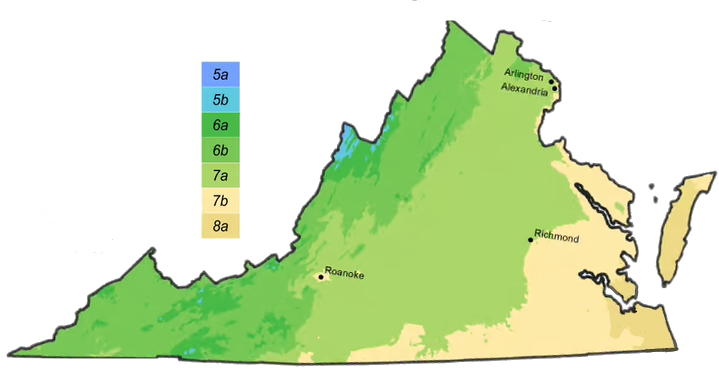
Commercially Available
My Native Garden
Put together a printable/downloadable list of plants that you have in your garden.
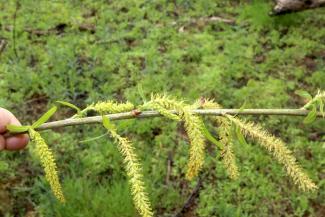
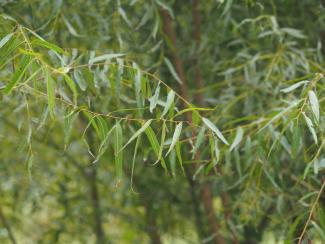
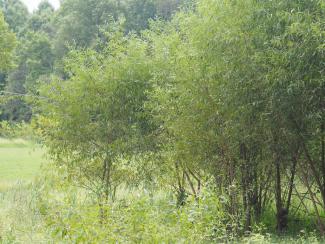
Fresh tidal marshes, fresh tidal swamps, forested wetlands, floodplains, wet meadows; regularly to permanently flooded
This is a larval host plant for several butterflies, including Eastern tiger swallowtail, Mourning cloak, Red-spotted purple, and Eastern comma. Its buds and catkins are eaten by birds. It provides excellent leaf season cover for birds in wetland sites. Salix genus supports many species of specialized bees. Preferred food of ruffed grouse and pine grosbeak
Shrub-like. Good streambank stabilizer. Tolerates flooding; tolerates salinity to 0.5 ppt. Not suitable near houses - susceptible to breakage, and roots seek out pipes with water. Can be an aggressive spreader. This tree is included in the Homegrown National Park: Keystone Trees and Shrubs