Common Name
Japanese stiltgrass
Plant Form
Grasses, Sedges & Rushes
Region
Coastal
Piedmont
Mountain
Considered Invasive by the State of Virginia?
Yes
Threat Level
High
Additional Info
Method of removal: Pull at any time. Cut before late August to prevent seeding. Preemergent crabgrass killer in early spring.
Additional guidance from the Clifton Institute:
Mowing can help knock it back and prevent further spread, but keep in mind that it may take a few years and it's important to keep at it. Stiltgrass should be mowed just as it’s beginning to flower, but before it has a chance to set seed, in late August or early September. If you cut too early, it may just grow new flowers.
- You’ll need to mow it very low (almost to bare ground); otherwise it may bounce back and set seed. We recommend doing this with a zero-turn mower, weed-eater or bushhog. Zero-turns are a good choice because you can cover a lot of ground. You can minimize the chance of hitting a Box Turtle by (1) making a first pass with the mower set as high as possible, (2) starting in the center of the patch and working your way outward, and (3) mowing in the afternoon during a dry spell. Weed-eaters are great for this because you don't have to worry about sticks and rocks, but of course it's hard work. Bushhogging with a tractor can also work, but it's more problematic because the tires can crush turtles.
- If you are OK with using herbicide, the most effective method for stiltgrass control is spraying it with very dilute aquatic-safe glyphosate or clethodim (0.1-0.5%). This low rate shouldn’t kill established perennials (though they may brown a bit).
- Hang in there! Since stiltgrass is a prolific seeder, it will take a few years of management to see a difference. In the mean time, minimizing soil disturbance can help prevent it from colonizing new areas.
Additional links
Native Look-alikes
Brachyelytrum erectum
Dichanthelium clandestinum
Leersia virginica
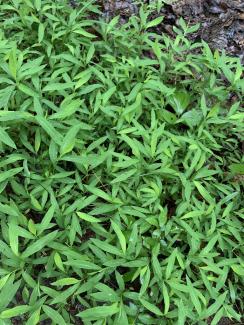
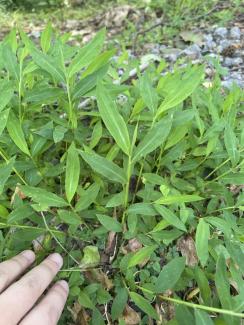
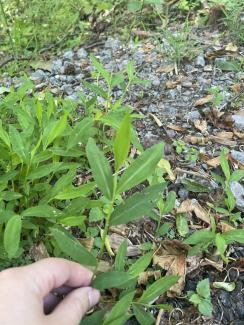
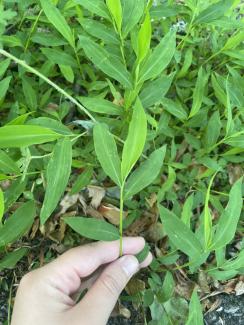
iNaturalist Research-grade Observations